
“Between Two Shores” — A Memoir in the Voices of Archibald Scott Cleghorn
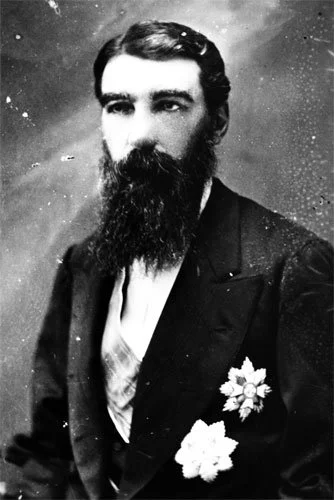
🌿 “Between Two Shores” — A Memoir in the Voices of Archibald Scott Cleghorn
I was born on November 15, 1835, in Edinburgh, Scotland, a city of stone and winter light. My earliest memories are of narrow streets and the sound of bells echoing against gray walls. My parents, Thomas Cleghorn and Janet Nisbet, raised me with the quiet steadiness of Scottish life. They could not have imagined that their son would one day cross oceans and find his destiny in a kingdom of sunlight and salt air. In the late 1840s, our family moved to New Zealand, and from there, on June 17, 1851, we arrived in Hawaiʻi. I was sixteen, still carrying the grief of losing my father, and suddenly responsible for operating a dry goods business I barely understood. Yet the islands welcomed me with a warmth that softened the sharp edges of my youth. The air smelled of plumeria instead of soot. The people spoke with a gentleness that felt like an invitation. I did not know it then, but Hawaiʻi would become the place where my roots grew deeper than they ever had in Scotland. My life changed forever when I met Miriam Kapili Likelike Kapaʻakea, known to the world as Princess Likelike. She was the sister of Queen Liliʻuokalani and King David Kalākaua, and through her I entered a family whose lineage carried the weight of a kingdom. Our marriage was not simply a union of two people. It was the merging of two worlds. When our daughter, Victoria Kaʻiulani, was born, I saw in her the living bridge between Scotland and Hawaiʻi. She carried the strength of her mother’s royal line and the quiet resolve of my Scottish heritage. At ʻĀinahau, our home in Waikīkī, I planted a banyan tree for her. I chose it because banyans are trees of shelter and endurance. In Hawaiian culture, they are places of gathering and reflection. Their aerial roots reach down into the earth, anchoring themselves again and again, as if determined to belong. I wanted Kaʻiulani to grow with that same sense of rootedness, even as the world around her shifted. She loved that tree. I often found her beneath its branches, reading, sketching, or simply listening to the wind. She once told me that the banyan felt alive, as if it understood her. Perhaps it did. Trees have a way of holding our stories long after we are gone. My public life unfolded over decades. From the 1870s into the early 1900s, I served wherever I was called. I became a member of the Board of Health, where I confronted the harsh realities of disease that threatened the Hawaiian people. Smallpox, tuberculosis, influenza, and Hansen’s disease were not distant threats. They were daily fears that shaped the lives of families across the islands. I worked to strengthen sanitation, quarantine procedures, and public health measures because I believed that a government’s first duty was to protect its people. As Collector General of Customs, I oversaw the kingdom’s largest source of revenue. I walked the docks at dawn, ensuring that trade remained steady and that the kingdom’s economy could withstand the political storms gathering on the horizon. When I served as Acting Governor of Oʻahu, I carried the responsibility of public order, land management, and civic affairs during a time when the monarchy faced unprecedented challenges. I also served as a member of the Bureau of Immigration, a trustee of Queen’s Hospital, and president of the Pacific Club, each role offering a different way to support the community that had become my own. Yet for all my political responsibilities, it was horticulture that brought me the deepest peace. Plants do not deceive. They respond only to care, patience, and understanding. At ʻĀinahau, I created gardens that blended the botanical traditions of my Scottish upbringing with the vibrant flora of Hawaiʻi. I introduced new species to the islands and cultivated a landscape that became a sanctuary for my family and a symbol of the cultural blending that defined my life. My work extended beyond my own estate. As president of the Kapiʻolani Park Association in the 1880s, I oversaw the planting of banyan trees and the double row of ironwood trees that still stand at the base of Diamond Head. I wanted Honolulu to have a public space where families could gather, where children could run freely, and where the natural beauty of the islands could be preserved for generations. Later, as a steward of public gardens in the Territory, I continued this work, shaping the early park system that remains central to Honolulu’s identity. These contributions were not merely aesthetic. They helped define the social fabric of Hawaiʻi. Parks became places where communities gathered, where cultural events were held, where the people of Honolulu could breathe, rest, and connect. My horticultural work supported public well being, strengthened civic life, and created shared spaces that reflected the spirit of aloha. I also believed deeply in preserving Hawaiʻi’s history. In 1877, Princess Likelike and I donated the land surrounding the Captain Cook monument at Kealakekua Bay to the British government. This act ensured that a site of profound historical significance would be protected. It symbolized the connection between Hawaiʻi and the wider world, a connection I understood intimately as a man who had crossed oceans to find his home. The most painful chapter of my life came with the political upheaval that led to the overthrow of the monarchy. I watched my daughter Kaʻiulani carry the burden of representing her people on foreign shores. She traveled to the United States and Europe, speaking with grace and courage in defense of her kingdom. I was proud of her, yet I feared for her. She was young, and the world was often unkind to those who stood between nations. Sometimes she wrote to me from abroad. Her letters carried the weight of her responsibility. She told me she missed the banyan tree. She said its branches felt like arms that held her, and that when she stood beneath it, she felt both protected and powerful. She asked me to care for it until she returned. I promised her I would. When she died in 1899, the gardens of ʻĀinahau seemed to lose their color. I continued to tend them, but the joy had gone out of the work. The banyan tree remained, its roots deep and its branches wide, a living memory of the daughter I loved more than life itself. I died on March 6, 1899, at my beloved ʻĀinahau estate, the place where I had planted trees, raised my daughter, and built a life that bridged two worlds. I was born in Scotland, but Hawaiʻi shaped me. It taught me that identity is not fixed. It grows like a garden, shaped by the soil in which it is planted and the hands that tend it. If I am remembered, I hope it is not only for the titles I held or the trees I planted. I hope I am remembered for loving Hawaiʻi with the devotion of a man who found his true home far from the land of his birth. My life was a testament to the idea that belonging is not inherited. It is earned through service, loyalty, and the willingness to nurture the place and people who have given you a home. And if you ever visit Waikīkī and see a banyan tree whose branches stretch like open arms, perhaps you will feel what my daughter felt. Perhaps you will understand that some roots grow deeper than blood, deeper than borders, deeper even than time.